Gilgamesh: The Opera
An Operatic – Dance – Theater – Dramatic Fantasy
Journey of a Mesopotamian demigod/king & his quest for immortality
Inspired by the “Epic of Gilgamesh”
The oldest surviving work of literature in human history.
Premier Performances:
Sat • Mar 28, 2026 • 8:00 PM
Sun • Mar 29, 2026 • 4:00 PM
Cerritos Center for the Performing Arts, Los Angeles, CA
Gilgamesh: The Opera invites audiences into a world where legend becomes living art. Ancient words carved into clay tablets thousands of years ago gather breath, voice, and movement once again in this operatic retelling of the Epic of Gilgamesh. A reminder that courage, grief, and the pursuit of legacy are timeless – echoing across centuries, and deeply, unmistakably human.
Commissioner: Assyrian Arts Institute
Executive Producer: Nora Betyousef Lacey
Music Composer & Conductor: Derrick Skye
Librettist & Stage Director: Diana Farrell
Ethnomusicologist & Dramaturg: Dr. Eve Sada
Become a sponsor of Gilgamesh, The Opera through our Legacy Collection.
What Is Gilgamesh: The Opera?
Gilgamesh: The Opera is a sweeping operatic–dance–theater experience and historic Assyrian opera that reimagines the world’s oldest epic, the Epic of Gilgamesh, for a contemporary stage. Premiering March 28, 2026, at the Cerritos Center for the Performing Arts in Los Angeles, this new opera production brings the ancient Mesopotamian legend of Gilgamesh, the mighty demigod and deeply human king of Uruk, into vivid focus. Through powerful music, dramatic storytelling, and movement rooted in ancient ritual and modern performance, Gilgamesh: The Opera explores timeless themes of friendship, passion, grief, and the search for meaning in the face of mortality.
Click here for the Gilgamesh: The Opera Press Release.
Project Overview
The Assyrian Arts Institute (AAI) is a Los Angeles-based nonprofit organization dedicated to showcasing the rich artistry of Assyria and its people, reaching a global audience through opera performances, cultural exhibitions, and artists scholarships. AAI strives to support gifted Assyrian artists and those with an interest in Assyrian arts, while preserving and celebrating Assyrian heritage. By connecting Assyria’s ancient roots to the modern world, AAI aims to foster a deeper understanding of this unique culture.
Gilgamesh: The Opera brings to life the heroic journey of the demigod king of ancient Uruk, dramatizing timeless themes of friendship, love, mortality, and the human quest for immortality in this world premiere production. Presented as an operatic prologue followed by two powerful acts, this performance promises to captivate audiences and resonate across generations. Rich in mythological depth, the opera explores profound human emotions, universal values, and timeless themes, offering cultural relevance and meaningful connections to our lives today.
Gilgamesh: The Opera Background
The Assyrian Arts Institute (AAI) presents Gilgamesh: The Opera, a two-hour Mesopotamian opera inspired by the Epic of Gilgamesh, one of humanity’s oldest literary works and the world’s first known epic poem . The ancient Epic of Gilgamesh, inscribed on twelve cuneiform clay tablets discovered at Assyrian archaeological sites in the 1850s, chronicles the legendary king of Mesopotamia and his quest for meaning beyond mortality.
Today, the Assyrian community is spread across the globe, with an estimated three million people, many of whom are descendants of those who lived in ancient Mesopotamia. Though stateless, this community has faced significant challenges, including geopolitical instability and forced migration from their ancestral homeland. As a result, the importance of artistic expression has often taken a backseat in the face of these hardships.
Through these struggles, Assyrian arts have evolved into a unique fusion of ancient tradition and contemporary performance, creating powerful cultural experiences that resonate with modern global audiences.
Reimagining the Epic of Gilgamesh for a Contemporary Stage
Gilgamesh: The Opera summons the ancient Mesopotamian epic, the Epic of Gilgamesh, where gods walk beside mortals and destiny is never what it seems. When the formidable King Gilgamesh meets his divine counterpart Enkidu, a fraternal bond forms that reshapes a kingdom. After a shattering loss, Gilgamesh ventures into realms beyond imagination—stalked through an enchanted wilderness, passing through jeweled gates of the gods, and crossing the shadowed waters where immortality is guarded. Seeking to alter the truths whispered by the universe, he discovers a power greater than eternal life: legacy born of compassion, wisdom, and love.
Audiences are invited to experience an operatic evening of mythic scale and emotional intimacy, where epic battles, divine encounters, and the tender bond between Gilgamesh and Enkidu unfold with cinematic sweep. This new opera runs approximately two hours, including a prologue.
Project Purpose and Goal
Gilgamesh: The Opera serves a vital cultural mission: preserving Assyrian history, culture, heritage and the Assyrian language – the world’s oldest continuously spoken alphabetic language—through the power of live performance and storytelling.The Gilgamesh opera serves to revive the rich Assyrian heritage and share it with a wide audience for contemporary audiences in Los Angeles and beyond, bridging ancient Mesopotamian traditions with modern theatrical innovation. In this critical moment, as Assyrians face an uncertain future in their homeland, the goal is to expand and amplify creative expression, making art a powerful tool to keep the Assyrian identity visible and vibrant.
The destruction of Assyrian artifacts in the Middle East by extremist groups stands as a tragic symbol of the erasure of human history. It is crucial for the Assyrian community to demonstrate that our culture is not extinct—it lives on in each of us. Through productions like Gilgamesh: The Opera at the Cerritos Center for the Performing Arts , AAI seeks to present Assyrian arts to a diverse and appreciative audience. The Assyrian Arts Institute invites Assyrians and global cultural allies to support the success of Gilgamesh and its creation, ensuring that this enduring legacy continues to inspire the world.
Production Leadership
Our World-Class Creative Team and Cultural Leadership
Commissioned by the Assyrian Arts Institute and created by an international team of artists, the work reflects a rare fusion of cultural authenticity and creative innovation. Composer and conductor Derrick Skye crafts a vibrant, multicultural operatic score that bridges Western orchestral tradition with Mesopotamian musical languages. Librettist and stage director Diana Farrell shapes the ancient tale into an emotionally resonant theatrical narrative, supported by the research and cultural expertise of ethnomusicologist and dramaturg Dr. Eve Sada. Executive producer Nora Betyousef Lacey leads the project as part of the Institute’s mission to champion, preserve, and elevate Assyrian arts on the world stage.
Nora Betyousef Lacey (Executive Producer)

In April 2017, Mrs. Lacey founded and inaugurated the Assyrian Arts Institute (AAI) as a 501(c)(3) nonprofit organization. AAI is dedicated to preserving Assyrian heritage and raising public awareness about the stateless Assyrian nation and its causes through the arts.
Mrs. Lacey’s career began over 40 years ago in the biotechnology industry, where she became an entrepreneur and founded Cell Marque Corporation. The company specialized in the research, development, manufacturing, and distribution of in vitro diagnostic products for cancer detection. Mrs. Lacey holds degrees in Biological Sciences and Business Administration from San Jose State University and has lived in Iran, California, Texas, Arkansas, and Nevada.
A dedicated philanthropist, Mrs. Lacey established the Nora Betyousef Foundation after selling her company in late 2014. The foundation, which bears her namesake, is focused on mentorship and Assyrian Studies. In 2019, she launched the “Avimalek Betyousef Program of Assyrian Studies” at the University of California, Berkeley. Recently, her foundation has partnered with the Nineveh Academic Chair for Assyrian Studies at Salamanca University in Spain.
As Executive Producer, Mrs. Lacey oversees the management and development of the Gilgamesh project, including its operations, programming, and overall strategic direction.
Diana Farrell (Librettist and Stage Director)

Mrs. Farrell is a multitalented artist, arts entrepreneur, and the founder of the prestigious Lyric Opera of Orange County (LOOC). She is also a renowned opera singer with a deep passion for both performance and arts leadership. In March 2022, Mrs. Farrell was honored as one of the “Women Leaders of Orange County in the Arts.” Later that year, in October 2022, she and LOOC received recognition as part of the “LA Times OC Visionaries,” with the company being named “Emerging Arts Organization of the Year.” In 2023, Mrs. Farrell was awarded the Virginia Schorr Prize for Women in Opera in the American Prize competition, celebrating American excellence in the arts.
Raised with a strong connection to her Assyrian heritage through her mother’s side, Mrs. Farrell has always embraced her roots. She expressed her excitement about collaborating with fellow Assyrian artists, saying, “I am thrilled at the prospect of working alongside other Assyrian artists. My family has always worked to preserve the traditions of the previous generations. The vibrancy of cultural pride is a unique and cherished aspect of being Assyrian, and I am deeply moved by the sense of unity and acceptance that our shared history has instilled in us.
Derrick Skye (Music Composer and Conductor)

Mr. Skye is a 2024 Grammy nominee for Black Ocean. An acclaimed composer, conductor, and musician based in Los Angeles, Mr. Skye is renowned for his transcultural approach to music, integrating diverse musical practices from around the world into his compositions. Driven by a fascination with the musical connections that transcend cultural boundaries, he has written orchestral works commissioned and performed by prestigious ensembles such as the BBC National Orchestra of Wales, the London Philharmonic Orchestra, the Netherlands Philharmonic Orchestra, the National Arts Centre Orchestra (Canada), the Dayton Philharmonic Orchestra, the Los Angeles Chamber Orchestra, and The John F. Kennedy Center. His groundbreaking collaborative electro-acoustic opera, commissioned by The Lincoln Center and recently featured at TED 2023, explores the intersection of artificial intelligence and live performance.
Mr. Skye has also composed choral works for the Los Angeles Master Chorale, Conspirer, and EXIGENCE, as well as numerous chamber pieces. Highlights of his oeuvre include Prisms, Cycles, Leaps for orchestra, a rich fusion of Western classical music, Balkan folk music, Ghanaian music from the Volta Region, and Hindustani classical traditions; American Mirror for string quartet, which reflects on the confluence of cultures in American society, particularly the descendants of refugees, immigrants, and enslaved people; and god of the gaps, a solo violin piece that incorporates quarter-tone flats from Persian classical music. Rhythm and movement are recurring themes in his work, and he has frequently collaborated with choreographers such as Yeko Ladzepko-Cole, the Leela Dance Collective, Sheetal Gandhi, and synchronized swimming champion and coach Sue Nesbitt.
Through his music, Mr. Skye believes in the power of art to inspire, connect, and foster cross-cultural dialogue. Regarding his involvement with the Gilgamesh project, Mr. Skye states: “The story’s roots in the Assyrian community, known for its rich cultural diversity, resonate deeply with me. The blend of influences and identities reflected in the epic mirrors my own multifaceted cultural background, and my work has always aimed to weave together diverse heritages. Just as Gilgamesh sought meaning in the enduring impact of his actions, I find deep significance in contributing to the preservation and celebration of cultural heritage through music. This personal connection inspires me to create a score that honors the diverse heritage embedded in the Epic of Gilgamesh and the Assyrian community.
Dr. Eve Georges Sada (Ethnomusicologist, Dramaturg, Choral Conductor)

Dr. Sada, an indigenous Assyrian from her homeland, was born and raised in Iraq. She is a wife, mother of two, and the daughter of the esteemed General Georges Sada. Currently, Dr. Sada is a postdoctoral fellow at the Center for the Study of World Religions (CSWR) at Harvard Divinity School. She holds both a Master’s degree in Music Education and a Doctor of Musical Arts (DMA) in Choral Conducting from the University of Oklahoma.
In 2021, Dr. Sada was awarded the Provost’s Dissertation Prize from the University of Oklahoma for her outstanding work in the Humanities and Fine Arts. Her dissertation, titled “Assyrian-Syriac Chants from the Liturgy of the Church of the East,” explores the rich musical genres of Assyrian liturgical chants within the Church of the East tradition. In her recent article “Sacred Sounds: Assyrian Chant Legacy”, Dr. Sada explores the significance of traditional secular chants. She writes, “Assyrian folk chants such as Rawe transmit narratives sharing the memories of our culture enduring countless storms, carrying our resilience and survival, connecting us to our ancestors and ancient past.”
Dr. Sada’s current work focuses on preserving Assyrian chanting through rigorous academic documentation. As she states, “We need to showcase our rich heritage to the world through every field, especially through the arts. As a researcher and conductor, I am dedicated to documenting and preserving our melodies. We must recognize that our voices as Assyrians won’t be heard unless we all unite in this effort. Academia is one of the most powerful tools in this work, and I will continue to publish as much as possible. Our ancestors fought tirelessly to safeguard our nation and make us proud Assyrians. Now, it is our responsibility to present our identity with the utmost professionalism.
Dr. Zach Cherry
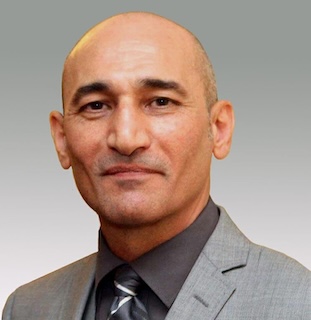
Dr. Zack Cherry is a distinguished Assyrian scholar in the field of Assyriology. He previously served as a researcher at the Faculty of Assyriology within the Department of Linguistics and Philology at Uppsala University where he earned his Ph.D. His research focuses on the history, culture, religion, archaeology, and languages of ancient Mesopotamia, with a focus on the history and linguistic developments of the Neo-Assyrian period. His expertise spans Sumerian, Akkadian (Assyrian/Babylonian), Ancient Aramaic, Classical Syriac, Arabic, and Modern Assyrian. His scholarly contributions include serving as an associate editor for the Assyrian-English-Assyrian Dictionary (Helsinki, 2007) and authoring the monograph Aramaic Loanwords in Neo-Assyrian 911 ̶ 612 B.C. (PSU Press, 2023).
Dr. Efrem Yildiz Sadak (Professor, Cultural Advisor)

Dr. Efrem YILDIZ, founder and current President of the Nineveh Academic Chair, is a renowned expert in history and languages. He has studied Hebrew, Aramaic, Greek, and Latin, and is fluent in German, Italian, Spanish, English, French, Turkish, and Modern Assyrian. Dr. Yildiz is a professor in the Department of Hebrew and Aramaic Studies at the University of Salamanca in Spain, where he also serves as a member of the Commission for the Degree in Hebrew and Aramaic Studies. He is an active committee member for several scientific journals and has authored or co-authored numerous books and articles on Aramaic language, literature, and the history and culture of the Aramaic-speaking peoples.
From 2017 to 2022, Dr. Yildiz served as the Vice-President/Rector for International Relations at the University of Salamanca. Prior to that, he was Vice-Dean for International Relations in the Faculty of Philology from 2003 to 2010. He currently oversees the Department of Hebrew and Aramaic Studies at the University of Salamanca.
In addition to his academic work, Dr. Yildiz is an Executive Board member of the Coimbra Group, a consortium of 41 prestigious European universities, and he coordinates the Latin America and Development Cooperation Working Groups for the consortium. He has been the coordinator of the European Alliance Project, European Campus of City Universities, since 2020, and is the Principal Investigator (PI) for the European Commission’s Research Project, Research and Innovation for Cities and Citizens (RI4C2).
Wilfred Bet-Alkhas (Scholar, Cultural Advisor)

Mr. Bet-Alkhas is a prominent leader and advocate within the Assyrian community, widely recognized for his extensive contributions to activism, education, and community engagement. His dedication to the Assyrian people began in the early 1980s when he played a key role in establishing the Cultural Wave of Nisibin, the youth group of the Assyrian American Association of San Jose. During this time, he was mentored by influential figures in Assyrian language and nationalism, including William Daniel, Dr. Ashoor Moradkhan, Yosip Bet-Yosip, Ninos Aho, Hannibal Alkhas, and Nimrod Simono.
After graduating from university, Mr. Bet-Alkhas launched a weekly newsletter that eventually evolved into Zinda Magazine, the largest Assyrian news publication in history. By early 2006, Zinda had reached thousands of Assyrian subscribers in over 60 countries. His work has significantly advanced the promotion of Assyrian language and heritage, both as an instructor of Assyrian language and history at San Jose State University and through several online courses. He has also edited numerous articles and books by notable Assyrian authors.
Currently, Mr. Bet-Alkhas serves as the president of the Assyrian American Association of San Jose. He holds degrees in Human Resources Management from UC Santa Cruz, Political Science and International Relations from UC Irvine, and has pursued graduate studies in Molecular Biology at San Jose State University. He resides in Roseville, California, with his wife, Nina, and their children, Inanna and Enlil.
Tony Khoshaba (Cultural Advisor)

Tony Khoshaba was born in Urmia, Iran, to Assyrian parents. He currently resides in San Jose, California, with his wife, Dr. Nahrin, and their three daughters, Ayla, Edena, and Elona. By profession, Tony is a software engineer with over 30 years of experience in the tech industry. Tony has been deeply involved in Assyrian cultural and artistic activities throughout his life. During his student years in Iran, he actively participated in cultural initiatives in Urmia, Tabriz, and Tehran. In the 1980s, he co-founded the Nissan Cultural and Art Association in Urmia. In Tehran, he was a member of the editorial board of Ishtar, a bi-weekly publication. In Tabriz, he worked with fellow Assyrian students to revive the Assyrian Youth Center, which produced newsletters and theatrical performances. As a graduate student in Tehran, he joined the Assyrian Youth National and Cultural Association, serving for several years on its central committee. After moving to the United States, Tony continued his cultural involvement. In Chicago, he served as a director of the Assyrian Academic Society for many years. In California, from 1996 to 2020, he was an officer of the Assyrian Aid Society of America. During this time, he founded the Mesopotamian Night project in 1987, aiming to preserve and promote performing arts within the Assyrian community. Tony’s vision emphasized the production of Assyrian operas as a means of maintaining cultural identity in the diaspora. He contributed to several significant productions:
● Opera Inanna: Supported bringing excerpts to the stage.
● Gilgamesh Opera: Developed a libretto based on Rabi Addai Alkhas’s modern Assyrian translation, commissioning composer John Craton. Scenes were performed in 2008 and 2009.
● Qateeni Opera: Compiled a libretto from Rabi Daniel’s epic Qateena Gabbara, with music by Michel Bosc. Excerpts were performed in 2009.
● Ninous-Shamiram Operetta: Based on Rabi Yosip Bet-Yosip’s poem, also commissioned from Michel Bosc in 2010.
● Musical Malik Raama: Produced with Edwin Elieh based on Rabi Hannibal Alkhas’s poetry book.
● Other notable productions include The Tragedy of Badri, portraying the Assyrian Genocide, Talaboota, and Maam Shallou. Tony’s contributions culminated in the production of Ebrahimi’s Majnavta Musical and his ongoing support for the Gilgamesh Opera initiative led by the Assyrian Arts Institute, which he sees as a continuation of his lifelong vision.
Dr. Michael Wingert (Assyriologist, AAI Grant Writer)

Dr. Wingert, born in California, developed a deep love for Assyria, which ultimately led him to his Assyrian wife, Dr. Ramina Wingert. Together, they have three children. Dr. Wingert earned his PhD from UCLA in Near Eastern Languages and Cultures, specializing in the languages and religious traditions of Mesopotamia and the Levant. His research spans from the Bronze and Iron Ages to Late Antiquity, with a particular focus on Semitic languages, including ancient Aramaic and Akkadian, as well as Modern Assyrian.
Currently serving as Dean of Agora University’s Holy Transfiguration College, Dr. Wingert oversees programs in Near Eastern cultures and Eastern Christianity, and teaches courses in Syriac language, patristics, and scripture. In 2023, he founded the Center for Culture and Indigenous Studies, dedicated to preserving and promoting indigenous cultures. Prior to his current role, Dr. Wingert taught at UCLA, where he developed a course on ancient medicine. He also teaches Biblical Aramaic and Akkadian at Fuller Theological Seminary in Pasadena, where he continues to make significant contributions to the field of Assyrian studies.
Josephine Zomayah Attisha (Grant Officer)

Ms. Attisha combines her expertise as a consultant and writer to support communities and organizations. With a background in English literature and a master’s degree in public administration, she has successfully facilitated numerous grants and managed administrative processes for nonprofit organizations and enterprises.
Gilgamesh: The Opera Venue Information
Venue: Cerritos Center for the Performing Arts
Address: 18000 Park Plaza Dr, Cerritos, CA 90703
Location: Los Angeles County, Southern California
Parking: Free parking available
Accessibility: Fully accessible venue with elevators and ADA seating
About the Venue:
The Cerritos Center for the Performing Arts is a premier entertainment venue in Los Angeles County, featuring state-of-the-art acoustics and an intimate 1,800-seat theater. Located just off the 91 Freeway in Cerritos, the venue is easily accessible from throughout Southern California.
Carving The Future of Gilgamesh: The Opera
The premiere on March 28 & 29 marks the beginning of a larger journey for the work, which will continue to tour and grow. Guests, supporters, and cultural partners are encouraged to join the Assyrian Arts Institute in bringing this project to life, whether by attending the premiere at Cerritos Center for the Performing Arts or sponsoring this world-premiere historic production.
AAI is joined by talented visionaries who have more than a century of collective experience in producing performance arts.
Legacy Collection Sponsorship for Gilgamesh: The Opera
Be a part of the Gilagmesh legacy by supporting this epic venture. See the quick links below for availability and to learn how to sponsor.
Frequently Asked Questions
Q: When is Gilgamesh: The Opera?
A: March 28, 2026, at 8 PM & March 29, 2026 at 4 PM
Q: Where is Gilgamesh: The Opera performed?
A: Cerritos Center for the Performing Arts, 18000 Park Plaza Dr, Cerritos, CA 90703 (Los Angeles County)
Q: How long is the opera?
A: Approximately 2 hours including a prologue
Q: What is the Epic of Gilgamesh?
A: The Epic of Gilgamesh is the world’s oldest known work of literature, originating in ancient Mesopotamia over 4,000 years ago.
Q: Are tickets available for Gilgamesh: The Opera?
A: Tickets are available at https://bit.ly/gilgameshtickets
Q: What languages is the opera performed in?
A: English and Akkadian, with supertitles in English
Q: What organizations are involved in creating Gilgamesh: The Opera?
A: Gilgamesh: The Opera is produced by the Assyrian Arts Institute, in artistic partnership with Lyric Opera of Orange County and Bridge to Everywhere